
 Gum disease is one of the most common oral health conditions, but with the right treatment it can often be controlled and managed effectively. The type of treatment required depends on how early the condition is detected and how far it has progressed.
At Hassocks Dental Surgery, dentists and dental hygienists assess the health of your gums during routine visits as part of prevention and hygiene and recommend appropriate treatment to restore gum health and prevent further damage.
Understanding how gum disease is treated can help patients take the right steps to protect their teeth and gums.
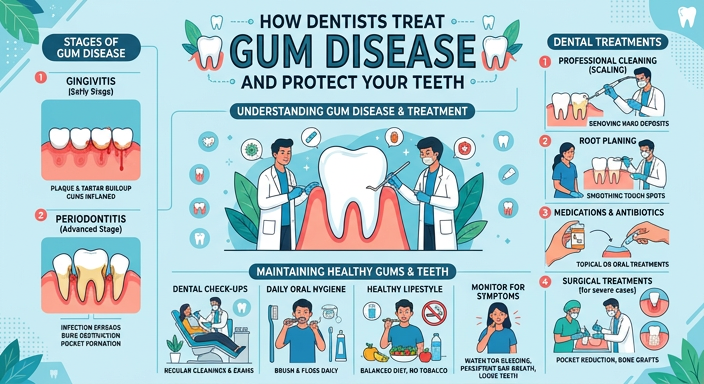
Treating Early Gum Disease (Gingivitis)
In its earliest stage, gum disease is known as gingivitis. At this stage, the gums become inflamed due to plaque build-up around the teeth.
The good news is that gingivitis is usually reversible with professional care and improved oral hygiene.
Treatment typically involves:
- Professional cleaning by a dental hygienist
- Removal of plaque and tartar from the teeth
- Advice on improving brushing and flossing techniques
When plaque is removed and oral hygiene improves, the gums can usually return to a healthy condition.
Professional Dental Cleaning
A key part of gum disease treatment is removing plaque and tartar that have accumulated on the teeth and around the gum line.
During a professional cleaning appointment, the hygienist will:
- Remove plaque and hardened tartar (calculus)
- Clean around and beneath the gum line
- Polish the teeth to remove surface stains
Professional cleaning helps reduce the bacteria that cause gum inflammation.
Deep Cleaning (Scaling and Root Planing)
If gum disease has progressed beyond gingivitis, more thorough cleaning may be required.
This treatment is often called scaling and root planing.
Scaling removes plaque and tartar from below the gum line, while root planing smooths the root surfaces of the teeth to help the gums reattach more securely.
This treatment helps eliminate bacteria and reduce gum inflammation.
Monitoring Gum Health
After treatment, dentists will continue to monitor the condition of your gums during routine dental check-ups.
They may measure the spaces between the teeth and gums, known as gum pockets, to ensure that the infection is improving.
Regular monitoring helps ensure that gum disease remains under control.
Maintaining Gum Health at Home
Successful gum disease treatment depends not only on professional care but also on good oral hygiene at home.
Dentists typically recommend:
- Brushing twice daily with fluoride toothpaste
- Cleaning between teeth with floss or interdental brushes
- Using mouthwash if advised
- Attending regular dental and hygienist appointments
These steps help prevent plaque from building up again.
Treating Advanced Gum Disease
If gum disease progresses to periodontitis, more advanced treatment may be required.
In some cases, patients may be referred to a specialist for additional care. Treatment may involve deeper cleaning procedures and ongoing monitoring to manage the condition.
Early detection and treatment are the most effective ways to prevent gum disease from reaching this stage.
Protecting Your Teeth and Gums
Healthy gums are essential for supporting strong teeth. By detecting gum disease early and providing appropriate treatment, dentists can help prevent damage to the gums and underlying bone.
Regular dental visits, professional cleaning, and good oral hygiene habits all play an important role in protecting long-term oral health.
If you notice symptoms such as bleeding gums or persistent bad breath, it is advisable to contact Hassocks Dental Surgery so the condition can be assessed and treated promptly.
